Posts

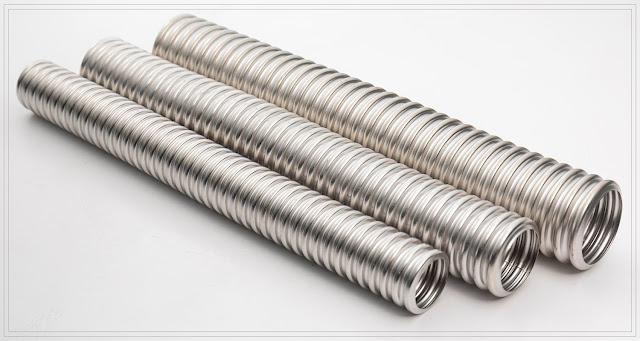
Stainless Steel Corrugated Tubes
Image
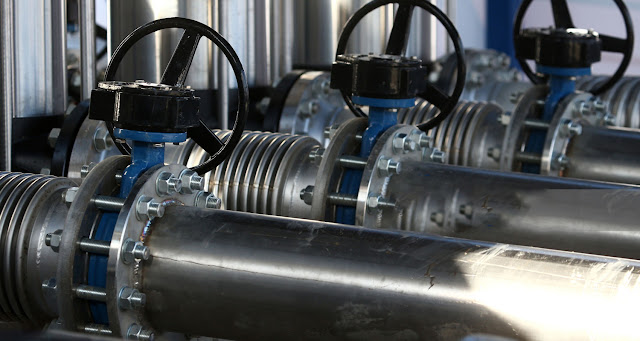
  Stainless Steel Corrugated Tubes corrugated stainless steel tubing used for gas piping in buildings. Since 1990 CSST has been used within many buildings in both exposed and enclosed areas to install new gas system piping. The article discusses CSST uses, sources, installation specifications, and safety measures to protect the gas piping from damage by abrasion, puncture, lightning strikes or other hazards. Gas piping codes and industry sources of CSST are included. Our page top photo, provided courtesy of Carson Dunlop Associates, a Toronto home inspection & education firm, illustrates an improper installation of standard yellow CSST gas piping - routed in ground contact in a wet area. Yellow "Standard" CSST gas piping galso requires special electrical ground bonding to reduce risk of damage & leaks in areas of high lightning strike activity. Philips Metal is one of the renowned manufacturer, exporter, stockist, stock holder and supplier of a qualitative range of ...
Stainless Steel Tubes

Image
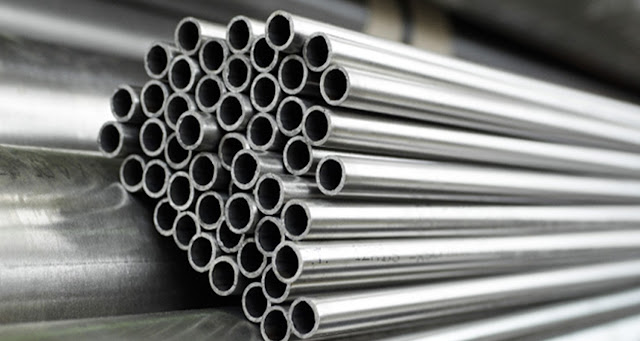
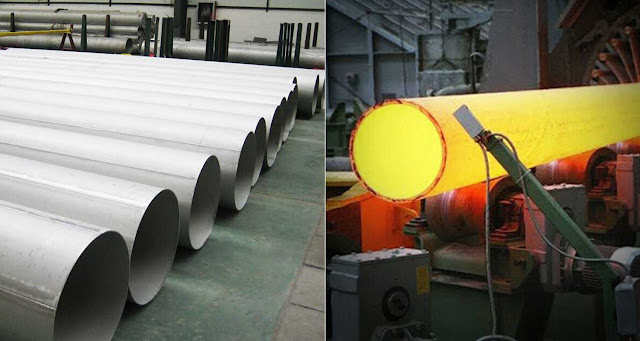
 Stainless Steel Tubes There are several common methods for describing pipe and tube dimension used in tubular piping system, we should calculate exact sizes without confusion, usually tube and pipe sizes is defined by outside diameter, wall thickness and length, inside diameter is also mentioned for tube sizes, these parameters are basic to dimensions concept. Philips Metal is one of the well-known manufacturer, exporter, stockist, stock holder and supplier of a qualitative range of Stainless Steel Tube that are being designed as per the international and national standard quality of raw materials. Our SS Welded Tubes are made up of through rotary and extrusion piercing. Relatively known for their superior functionality, matchless quality and robust construction; our Stainless Steel ERW Pipes are obtained from the reliable companies of the market. SS Welded Tubes are being found in a widespread range of applications such as in Petrochemical, Chemical, Oil & Gas, Refinery, ...

Stainless Steel Pipe

Image
 Stainless Steel Pipe Stainless Steel Seamless Pipe is a broad area of piping material in different compositions, shapes and types. We are manufacturer and supplier of stainless steel pipes of all types. Philips Metal is in the business for several years now and we also produce Stainless Steel Pipe types. There are different types and sizes available in ss pipes. The Stainless Steel ERW Pipe is electric resistance welded whereas the other types such as electric fusion welded and cold drawn pipes are also available. There are different standards such as the ASME B36.19 Stainless Steel Pipe . The B36.19 is for wrought stainless steel pipes ranging from 14 inches to 22 inches. There are other standardizations such as schedules which denote the diameter to wall thickness proportions. The Stainless Steel Schedule 40 Pipe is a medium thickness schedule. The schedules are useful in calculating the pressure containment of each pipe types. The higher the schedule, the higher the pressure ...

What isDifference Between Incoloy 800 and Inconel 800

Image
 Difference Between Incoloy 800 and Inconel 800 Incoloy 800 also know Inconel 800 . Its an alloy which is composed of nickel, chromium and iron with exceptional strength and resistance to oxidation and carburization in immense temperature atmosphere. The high content of nickel maintains the structure to attain the ductility in the alloy, it also furnishes the alloy against resistance to scaling, stress corrosion cracking and general corrosion. The alloy 800 is exquisite resistance to both chlorides, intergranular corrosion, stress corrosion cracking caused by sensitization. Inconel 800 vs Incoloy 800 Incoloy 800 is an alloy with a higher content of iron. Due to the alloy having a higher content of ferrous, and lower content of nickel, the cost of Inconel 800 becomes low. And because it is an economical option, the alloy is considered to be an ideal material for applications that are involved in elevated temperature. Despite being used at an elevated temperature, the applications ...

Difference Between Austenitic and Martensitic Stainless Steel

Image
 Difference Between Austenitic and Martensitic Stainless Steel The vast majority of metals have a crystalline structure in their solid state, meaning that they are made up of crystallised lattice structures of atoms. By definition, all steels, including stainless steels, are primarily made up of crystallised iron atoms with the addition of carbon. The iron in steel can exist in several different crystalline structures, dependent on the conditions of its creation. Ferrite, austenite, and martensite are all examples of iron’s crystal structures, and all are found within different types of steel. One of the defining differences between these crystal structures is the amount of carbon they can absorb - a greater carbon content generally, though not always, makes a steel harder, but more brittle. As a liquid, molten iron is not crystalline, and crystals are only formed when the material cools. When the material cools, steel solidifies as individual crystals forming gradually, which can ...

What is Aluminium and its Features

Image
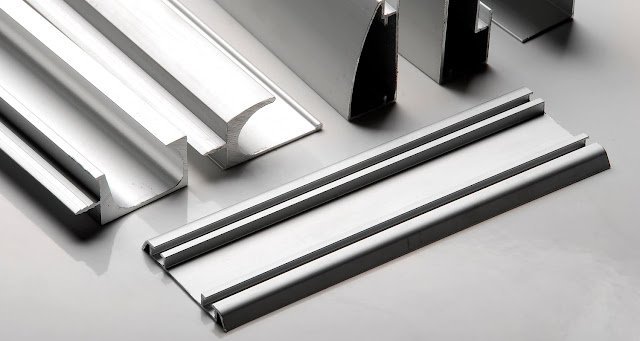
  What is Aluminium and its Features What is Aluminium Light, durable and functional: these are the qualities that make aluminium one of the key engineering materials of our time. We can find aluminium in the homes we live in, in the automobiles we drive, in the trains and aeroplanes that take us across long distances, in themobile phones and computers we use on a daily basis, in the shelves inside our fridges and in modern interior designs, but a mere 200 years ago very little was known about this metal. Aluminium is a silvery-white metal, the 13 element in the periodic table. One surprising fact about aluminium is that it's the most widespread metal on Earth, making up more than 8% of the Earth's core mass. It's also the third most common chemical element on our planet after oxygen and silicon. At the same time, because it easily binds with other elements, pure aluminium does not occur in nature. This is the reason that people learned about it relatively recently. Forma...

What is Titanium and its Features

Image
  What is Titanium and its Features Titanium  Alloy is a manufacturing process that uses titanium. It replicates the exact shape of an item. Melted titanium poured into a wax pattern mold. Specialized ceramic material is then coated into the wax pattern mold and left to dry and harden. The wax pattern mold is then inverted and heated to let the wax melt and drip out of it. The ceramic shell becomes a superfluous investment mold. Liquefied titanium is then poured into the mold and cooled off. The mold is then broken off to reveal the replicated item. Why use Titanium? Besides being durable, Titanium is also light and sturdy . It is resistant to corrosion. It is very reliable in creating consumer products as well as sporting goods. It is the ninth most abundant metal in Earth’s crust. In 1979, William Gregor discovered it to be a mixture of magnetite. He called it “manaccanite” for the parish he discovered it with. It was later confirmed by Martin Heinrich Klaproth that the man...

What is Copper Alloy and its Features

Image
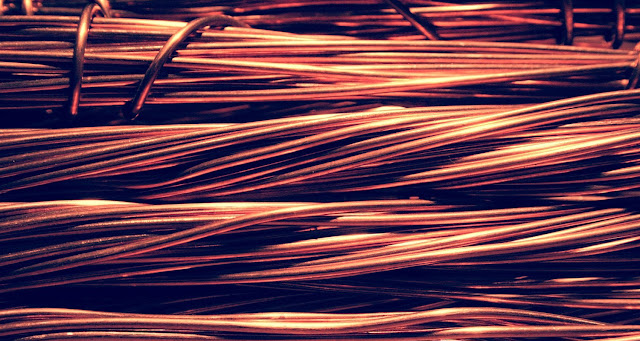
  What is Copper Alloy and its Features High purity copper is a soft, malleable, and ductile metal with very high thermal and electrical conductivity. A freshly exposed surface of pure copper has a reddish-orange color. Copper is used as a conductor of heat and electricity, as a building material, and as a constituent of various metal alloys, such as sterling silver used in jewelry, cupronickel used to make marine hardware and coins, and constantan used in strain gauges and thermocouples for temperature measurement. High purity copper has the ultimate strength of approximately 210 MPa, and yield strength of 33 Mpa, which limits its usability in industrial applications. But similarly as for other alloys , copper may be strengthened. The main strengthening mechanism is alloying in Cu-based alloys. Copper alloys are alloys based on copper, in which the main alloying elements are  Zn, Sn, Si, Al, Ni. Cu-based alloys constitute mostly substitutional solid solutions, for which sol...

What is 254 SMO and its Features

Image
  What is 254 SMO and its Features Stainless steel grade 254 SMO™ is a very high end austenitic stainless steel . It is designed with a combination of impact toughness resistance to chloride stress corrosion cracking, and pitting and crevice corrosion with strength that is twice that of the stainless steel 300 series. For certain applications, grade 254 SMO™ has been reported to be a cost-effective substitute for high nickel and titanium alloys. It is known to possess excellent workability as well. Fabrication and Heat Treatment Machinability Stainless steel grade 254 SMO™ is quite tough to machine due to the extremely high work hardening rate and lack of sulfur content; however using sharp tools, overpowered machine tools, positive feeds, good amount of lubrication, and slow speeds tend to provide good machining results. Welding Welding of stainless steel grade 254 SMO™ requires filler material without which it results in poor strength properties. Filler metals such as AWS A5....

What is Alloy 20 and its Features

Image
  What is Alloy 20 and its Features Alloy 20 is a austenitic nickel-iron-chromium alloy developed for maximum resistance against acid attack, specially sulfuric acid. It offers excellent resistance to pitting, crevice corrosion and general corrosion in chemicals containing chlorides and sulfuric, nitric , phosphoric and acids.For stabilization against sensitization and resultant intergranular corrosion Alloy 20 contains niobium. With relatively easy fabrication and elevated mechanical properties Alloy 20 also provides excellent corrosion resistance. Alloy 20 Explains The alloying elements of alloy 20 are: carbon 0.07, chromium 19 – 21, copper 3 – 4, manganese 2, molybdenum 2 – 3, nickel 32 – 38, niobium 8xC-1.0, phosphorus 0.045, silicon 1, sulfur 0.035, iron – balance (all in %). alloying elements of alloy 20 are: carbon 0.07, chromium 19 – 21, copper 3 – 4, manganese 2, molybdenum 2 – 3, nickel 32 – 38, niobium 8xC-1.0, phosphorus 0.045, silicon 1, sulfur 0.035, iron – balance ...

What is Nickel Alloy and its Features

Image
  What is Nickel Alloy and its Features Nickel is a silvery-white lustrous metal with a slight golden tinge. Nickel is one of most common alloying elements. About 65% of nickel production is used in stainless steels . Because nickel does not form any carbide compounds in steel, it remains in solution in the ferrite, thus strengthening and toughening the ferrite phase. Nickel steels are easily heat treated because nickel lowers the critical cooling rate. Nickel based alloys (e.g. Fe-Cr-Ni(Mo) alloys) alloys exhibit excellent ductility and toughness, even at high strength levels and these properties are retained up to low temperatures. Nickel and its alloys are highly resistant to corrosion in many environments, especially those that are basic (alkaline). Nickel also reduces thermal expansion for better dimensional stability. Nickel is the base element for superalloys. These metals have excellent resistance to thermal creep deformation and retain their stiffness, strength, toughne...

Popular posts from this blog

Stainless Steel Corrugated Tubes

What Are the Uses for Titanium Tubing?

What is Alloy Steel Properties And Uses Of Alloy Steel