Posts

Stainless Steel Corrugated Tubes
Image
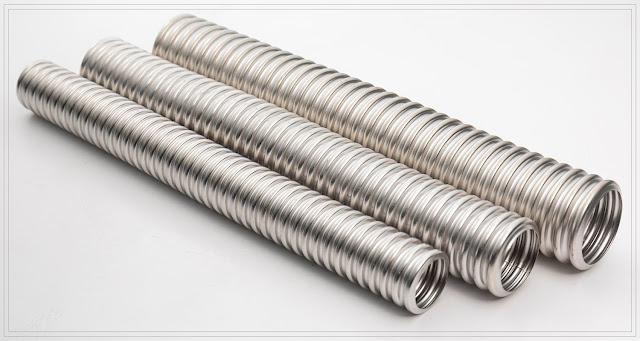
  Stainless Steel Corrugated Tubes corrugated stainless steel tubing used for gas piping in buildings. Since 1990 CSST has been used within many buildings in both exposed and enclosed areas to install new gas system piping. The article discusses CSST uses, sources, installation specifications, and safety measures to protect the gas piping from damage by abrasion, puncture, lightning strikes or other hazards. Gas piping codes and industry sources of CSST are included. Our page top photo, provided courtesy of Carson Dunlop Associates, a Toronto home inspection & education firm, illustrates an improper installation of standard yellow CSST gas piping - routed in ground contact in a wet area. Yellow "Standard" CSST gas piping galso requires special electrical ground bonding to reduce risk of damage & leaks in areas of high lightning strike activity. Philips Metal is one of the renowned manufacturer, exporter, stockist, stock holder and supplier of a qualitative range of ...

Grade 10.9 Bolts vs Stainless Steel Bolts

Image
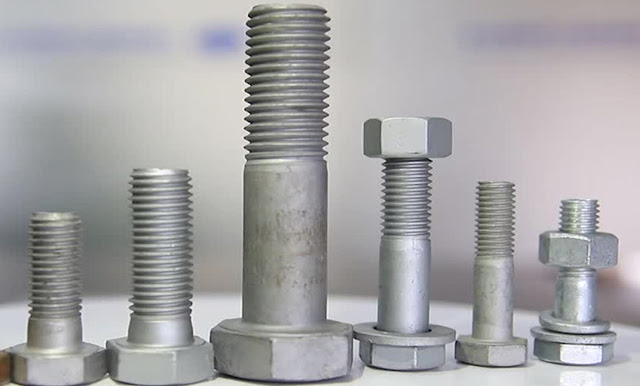
  Grade 10.9 Bolts vs Stainless Steel Bolts Grade 10.9 bolts are produced from carbon steel. Carbon steels are a relatively cheaper option than any stainless steel alloy. This is because the grade 10.9 hex bolts are alloyed with only carbon and iron. These two elements are cheaper, as compared to stainless steel which comparatively is a highly alloyed metal. Grade 10.9 carbon steel bolts are safe, especially from fires, hurricanes, tornadoes, and earthquakes. Furthermore, they are considered to be green because they can be recycled and are an environmentally friendly material. Grade 10.9 fasteners are also used in applications that are prone to shocks. Since the material has resistant to shock, it won’t come undone, unlike some stainless steel fasteners . Usually, bolts produced in grade 10.9 are tempered and quenched. Because carbon steel has been tempered and quenched, the resultant high strength bolts grade 10.9 , becomes harder and tougher. Ordinarily, welding carbon stee...

Monel vs Inconel

Image
  Monel vs Inconel The key difference between Inconel and Monel is that Inconel is a nickel–chromium-based alloy, whereas Monel is a nickel-copper based alloy. Inconel and Monel are common tradenames in industry. They are two groups of superalloys which have alloys with extreme corrosion resistance. However, both types are highly expensive as well. It is because of their expensive production process. What is Inconel? Inconel is a tradename of a group of superalloys. It contains austenitic nickel and chromium based superalloys. Manufacturers have specifically optimized these alloys in order to meet the toughest conditions during usage. In other words, Inconel has a high tolerance towards extreme heat and can keep its tensile strength at high temperatures without any change. However, this material is expensive. In addition to tolerating extreme heat, these alloys are oxidation-corrosion resistant. When heated, this material forms a thick and stable oxide layer. And, this oxide...

Difference Between Incoloy 800 and Inconel 800

Image
  Difference Between Incoloy 800 and Inconel 800 Incoloy 800 also known as Inconel 800 which is nickel-iron-chromium alloys with good strength and excellent resistance to oxidation and carburization in high-temperature exposure. The nickel content makes Incoloy800 highly resistant to both chloride stress-corrosion cracking and to embrittlement from precipitation of sigma phase. The general corrosion resistance is excellent. In the solution annealed condition, alloys 800H and 800HT have superior creep and stress rupture properties. Incoloy 800 is mainly in demand by applications with temperatures up to 1100° F, where alloys 800H and 800HT are normally used in temperatures above 1100° F where resistance to creep and rupture is required. The chemical balance allows the nickel steel alloy to exhibit excellent resistance to carburization, oxidation and nitriding atmospheres. Inconel 800, Incoloy 800 AMS 5871, ASTM B409, AMS 5877, BS 3072NA15, BS 3073NA15, DIN 17460, EN 10028-7, ...

Difference Between Pipe And Tube

Image
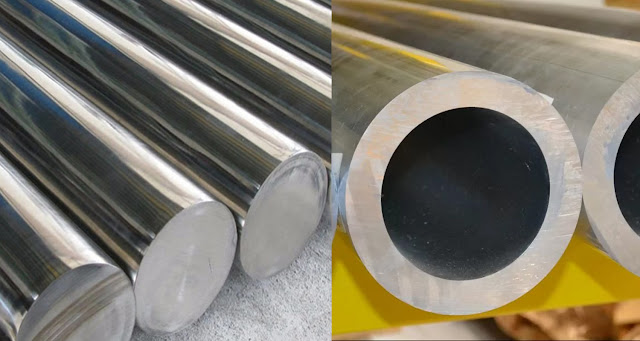
  Difference Between Pipe And Tube The pipes and tubes are used in tubular applications such as piping and tubing. The applications range from petroleum, petrochemicals to food and beverage industrial applications. The dimensions make a huge difference and account for the classification of pipes and tubes. The tubes have less wall thicknesses to diameter compared to the pipes. The pipes have higher wall thicknesses. The diameter and the wall thickness of the pipes and tubes account for the schedules and pressure capacities of the tubular products. The difference between pipe and tube diameter is that the tubes have less diameters, usually up to 2 inches where the pipes can range from small diameters such as ¼ inches up to 60 inches and more. When tubes are ordered, the outer diameters are referred and the pipes are referred with inner diameters and outer diameters. The wall thicknesses of the tubes vary and the wall thicknesses of the pipes vary but the pipe wall thickness ar...

Stainless Steel Plate 304L Vs Stainless Steel Plate 904L

Image
  Stainless Steel Plate 304L Vs Stainless Steel Plate 904L What is stainless steel? All steels have the same basic iron and carbon composition, but stainless steel also contains a healthy dose of chromium—the alloy that gives stainless steel its famous corrosion resistance. There are multiple grades called stainless steel , each with slightly different alloy composition, and therefore slightly different physical characteristics. Stainless steel must contain at least 10.5 percent chromium. Depending on the grade, it may contain much higher chromium levels, and additional alloying ingredients like molybdenum, nickel, titanium, aluminum, copper, nitrogen, phosphorous or selenium. 304 Stainless Steel Grade 304 stainless steel is generally regarded as the most common austenitic stainless steel . It contains high nickel content that is typically between 8 and 10.5 percent by weight and a high amount of chromium at approximately 18 to 20 percent by weight. Other major alloying element...

Hastelloy vs Monel

Image
  Hastelloy vs Monel What is hastelloy? Hastelloy is one the most versatile alloys to be used in many in many industrial applications. The material composition has chromium, carbon, cobalt, tungsten, molybdenum, vanadium, aluminum, titanium, niobium, iron, copper, nickel and other elements. There are different grades of hastelloys that have different composition. Some of the grades are Alloy C, C4, B, B2, C276 and so on. Monel on the other hand is a nickel copper alloy that has prominently nickel and copper in the composition with silicon, manganese, carbon, and iron. Hastelloy Applications Hastelloy is useful in many different applications in the below listed categories - Chemical Industries - Oil & Gas Industries - Pharmaceutical Industries - Petrochemical Industries - Geothermal - Water Desalination - Sea Water - LNG (Liquefied Natural Gas) - Nuclear Power - Mining - Biomass - Solar Power Hastelloy Properties Hastelloy is a nickel-molybdenum alloy that is especially suite...

What is Duplex Steel & Uses of Duplex Stainless Steels

Image
  What is Duplex Steel & Uses of Duplex Stainless Steels Duplex stainless steel is a type of stainless steel that is composed of grains of two types of stainless steel material, austenitic and ferritic. The word "duplex" refers to the two-phase microstructure of ferritic and austenitic steel grains. The ferritic and austenitic stainless steel grades have approximately equal proportions (i.e., 50% each) in duplex stainless steel . Duplex stainless steel offers high mechanical strength and excellent corrosion resistance properties. Philips Metal Explains Duplex Stainless Steel Duplex stainless steel is considered an alternative to the expensive nickel alloys and high alloy austenitic stainless steel materials used in the most demanding applications. Some benefits of duplex stainless steel include: - Two times stronger than ferritic or austenitic stainless steel grades - Higher toughness and ductility - Shows very good resistance from stress corrosion cracking - Ch...

Difference Between Duplex Steel S32205 & S31803 Alloy

Image
Difference Between Duplex Steel S32205 & S31803 Alloy Duplex stainless steels account for >80% of the consumption of duplex, super duplex and hyper duplex grades . Developed in the 1930’s for application in paper and pulp manufacture, duplex alloys are based around a 22% Cr composition and the mixed austenitic:ferritic microstructure that delivers desirable mechanical properties. Compared with the generic 304/316 austenitic stainless steels , the family of duplex grades will typically have twice the strength and provide a significant uplift in corrosion resistance. Increasing the chromium content of stainless steels will increase their pitting corrosion resistance. However, the Pitting Resistance Equivalent Number (PREN) that infers an alloys resistance to pitting corrosion also includes a number of other elements in its formula. This subtlety can be used to explain how the difference between UNS S31803 and UNS S32205 developed and whether it matters. Following the developme...

Standard and Specification of Stainless Steel Pipes & Tubes

Image
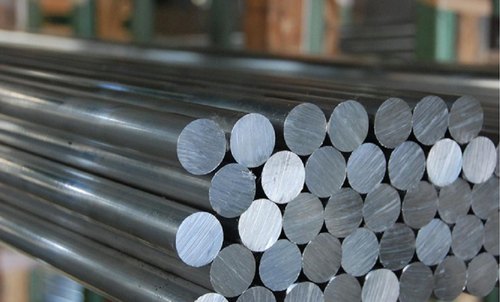
  Standard and Specification of Stainless Steel Pipes & Tubes Philips Metal Industries is a leading stockholder, suppliers and manufacturers of Stainless Steel pipes and tubes , These SS Pipes & TP seamless stainless steel tube suppliers are available in both seamless and welded form in OD and NB sizes. In addition to standard sizes, which are available in stock. We have our specialization into manufacturing and supply custom size cold drawn seamless tubes from our factory. Stainless Steel pipes and tubes can be offered in random lengths of up to 6meters long or cut to a specific length as required. Stainless steel pipe added with Ni and Cr chemical elements to provide better corrossion resistance for to use in different environment, common use material 304/L and 316/L , standard in ASTM A312, A213, A270 and etc. Stainless Steel Pipes & Tubes  |  304 Stainless Steel Pipes & Tubes 304L Stainless Steel Pipes & Tubes  |  304H Stainless S...

Why Stainless Steel is Popular in Pharmaceutical Company

Image
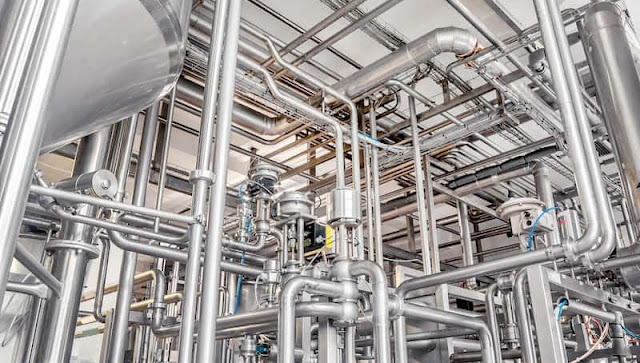
  Why Stainless Steel is Popular in Pharmaceutical Company Pharmaceutical industry is governed by strict regulatory norms. With time these norms have just got stringent. In order to comply with the regulations, high performance alloys containing chromium, nickel, molybdenum are used extensively throughout processes.  Higher composition of these alloys imparts greater resistance to adverse environments. Stainless steel is used in Pharmaceutical industry for manufacturing of tanks, pressure vessels, pipe works as well as more intricate parts like orthopaedic implants and hypodermic needles. Material used in the industry needs to interact with corrosive chemicals, high temperature, high pressure and withstand frequent fierce cleaning regimes. These adverse operating conditions are major concern for the industry as they may lead to various types of degradations like chloride stress-corrosion cracking, pitting corrosion, crevice corrosion and corrosion of weld heat-affected zones...

Popular posts from this blog

Stainless Steel Corrugated Tubes

What Are the Uses for Titanium Tubing?

What is Alloy Steel Properties And Uses Of Alloy Steel